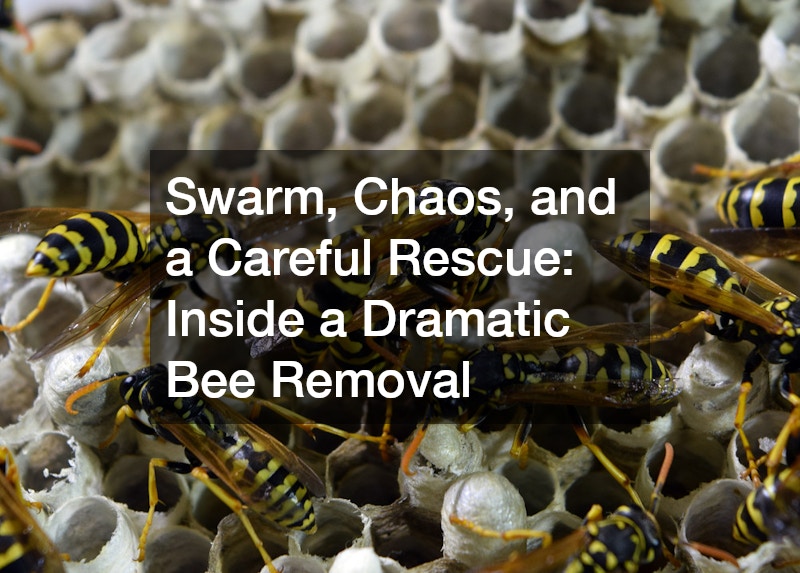

Not every bee job is routine. Some removals turn into high-stakes operations filled with tension, unexpected twists, and fast decision making. This particular call started as a simple hive relocation but quickly escalated into one of the most dramatic situations we have handled. Through it all, the goal never changed: safe and humane bee removal that protected both the homeowners and the bees.
Here is what happened and what it reveals about why professional humane bee removal matters.
The Call That Started It All
The homeowner reported heavy bee activity near the roofline. At first glance, it looked like a small swarm cluster.
But within minutes of arrival, it became clear that this was not a temporary resting swarm.
Bees were entering through a gap near a soffit vent. That is often a sign of an established hive inside the structure. A thermal scan confirmed it. There was a large colony hidden behind the exterior wall.
This was no minor issue. It required immediate but careful action.
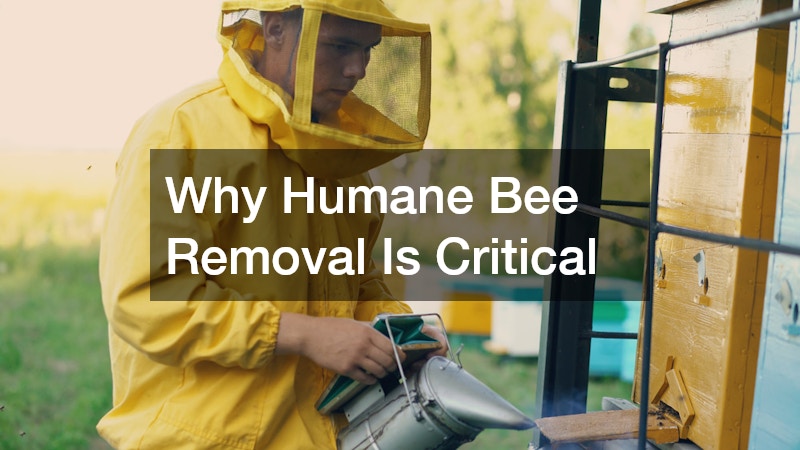
Why Humane Bee Removal Is Critical
Many people still believe the only solution to a hive in a home is extermination. That approach harms pollinator populations and often fails to address long-term structural damage.
Humane bee removal focuses on:
-
Relocating live bees safely
-
Preserving the queen
-
Removing honeycomb and brood
-
Preventing future infestations
-
Repairing entry points
Professional humane bee removal protects both the environment and the homeowner’s investment.
The Unexpected Twist
Once the soffit panel was removed, the true scale of the hive became clear. It extended across multiple studs and deep into the insulation.
Even more concerning, honey had started to drip down the interior wall cavity. That can attract ants, rodents, and even cause mold growth if left untreated.
The homeowner was understandably stressed. Bees were active. Honey was exposed. Structural materials were at risk.
This is where experience in humane bee removal makes all the difference.
Step 1: Containing the Situation
Before cutting further into the wall, the team set up containment barriers. Protective gear was secured, and a live bee vacuum system was prepared.
Unlike traditional extermination methods, humane bee removal requires careful suction systems that safely collect bees without harming them.
Each section of honeycomb was removed by hand to preserve brood frames where possible. The queen was located and secured in a transport box.
Once the queen is safe, the remaining bees naturally follow.
Step 2: Removing Honeycomb and Residue
One of the most overlooked aspects of bee removal is full comb extraction. If honeycomb is left behind, it can melt in hot weather, stain walls, and attract pests.
Humane bee removal is not just about saving bees. It is about complete remediation.
The team carefully removed:
-
Brood comb
-
Honeycomb
-
Wax residue
-
Contaminated insulation
Every inch of the cavity was cleaned and treated to eliminate scent markers that might attract a future swarm.
Step 3: Relocation
Once the hive was safely removed, the bees were transported to a local beekeeper who provides permanent homes for rescued colonies.
This is the heart of humane bee removal. Instead of destroying a colony, it is relocated to continue pollinating crops and supporting ecosystems.
Healthy colonies are valuable. Protecting them matters.
The Drama Continues
Just when it seemed the job was complete, more bees began clustering around a nearby exterior light fixture. A secondary pocket of activity had formed.
Further inspection revealed an additional comb section that extended beyond the initial cavity. This required additional removal and structural access.
Bee removals can be unpredictable. That is why professional humane bee removal requires flexibility, patience, and thorough inspection.
Structural Repairs and Prevention
After full removal, the damaged soffit and insulation were replaced. Entry points were sealed to prevent future infestations.
Preventative measures included:
-
Caulking small gaps
-
Installing reinforced vent screens
-
Advising routine inspections
-
Educating the homeowner on swarm behavior
Humane bee removal is only successful when the problem does not return.
Why DIY Bee Removal Is Risky
Attempting to remove a hive without training can lead to:
-
Aggressive defensive behavior
-
Incomplete comb removal
-
Structural damage
-
Honey leakage
-
Legal issues in protected areas
Professional humane bee removal ensures the job is handled safely and responsibly.
The Bigger Picture
Bees play a crucial role in agriculture and food production. Every colony saved through humane bee removal contributes to pollination and environmental stability.
Dramatic situations like this highlight why quick extermination is not the answer. Careful relocation protects ecosystems while solving property concerns.
Final Thoughts
What began as a simple call turned into a complex and dramatic rescue. Hidden hive expansion, structural contamination, and secondary clusters made this removal anything but routine. Yet through careful planning and humane bee removal practices, both the home and the colony were protected. Bee situations can escalate quickly, but with experienced professionals focused on safe relocation, even the most dramatic removals can have a positive outcome for everyone involved.